
In this article, we will cover the first three habits, part of the Private Victory: be proactive, begin with the end in mind, and put first things first. The first post from this series contains details about Paradigms and Principles. So, let’s get started!

Habit 1: Be Proactive
Fundamental principle about the nature of humans: between stimulus and response, humans have the freedom to choose.
“Proactivity” defined: we have the initiative and the responsibility to make things happen.
| Reactive language | Proactive language |
| there’s nothing I can do | let’s look at our alternatives |
| that’s just the way I am | I can choose a different approach |
| he makes me so mad | I control my own feelings |
| they won’t allow that | I can create an effective presentation |
| I have to do that | I will choose an appropriate response |
| I can’t | I choose |
| I must | I prefer |
| If only | I will |
Direct, indirect, and no control
The problems we face fall match one of three areas:
– direct control (problems involving our own behavior);
– indirect control (problems involving other people’s behavior);
– no control (problems we can do nothing about, such as our past or situational realities).
The proactive approach puts the first step in the solution of all three kinds of problems within our present Circle of Influence.
– Direct control – problems are solved by working on our habits. They are obviously within our Circle Of Influence. These are the “Private Victories” of Habits 1,2 and 3.
– Indirect control – problems are solved by changing our methods of influence. These are the “Public Victories” of Habits 4,5 and 6.
– No control problems involve taking the responsibility to change the line on the bottom of our face. To smile, to genuinely and peacefully accept these problems, and to learn to live with them, even though we don’t like them.
Whether a problem is direct, indirect, or no control, we have in our hands the first step to the solution. Changing our habits, changing our methods of influence, and changing the way we see our no-control problems are all within our Circle of Influence.
The “Haves” and the “Bes”
One way to determine which circle our concern is in is to distinguish between the haves and the bes.
The Circle of Concern is filled with the haves:
I’ll be happy when I have my house paid off.
If only I had a boss who wasn’t such a dictator…
If only I had a more patient husband…
If I had more obedient kids…
If I had my degree…
If I could just have more time to myself…
The Circle of Influence is filled with the bes – I can be more patient, wise, be loving. It’s the character focus.
Anytime we think the problem is “out there,” that thought is the problem. We empower what’s out there to control us. The changing paradigm is “outside-in” what’s out there has to change before we can change.
The proactive approach is to change from the inside out: to be different, and by being different, to effect positive change in what’s out there – I can be more resourceful, I can be more diligent, I can be more creative, I can be more cooperative.
We are responsible – “respons-able” – to control our lives and to powerfully influence our circumstances by working on be, on what we are.
The other end of the stick
While we are free to choose our actions, we are not free to choose the consequences of those actions. Consequences are governed by natural law. They are out in the Circle of Concern.
Our behavior is governed by principles. Living in harmony with them brings positive consequences; violating them brings negative consequences. We are free to choose our response in any situation, but in doing so, we choose the attendant consequence. “When we pick up one end of the stick, we pick up the other.”
The proactive approach to a mistake is to acknowledge it instantly, correct it, and learn from it. This literally turns a failure into a success. “Success,” said IBM founder T. J. Watson, “is on the far side of failure.”
But not acknowledging a mistake, not correcting it, and learning from it, is a mistake of a different order. It usually puts a person on a self-deceiving, self-justifying path, often involving rationalization (rational lies) to self and to others. This second mistake, this cover-up, empowers the first, giving it disproportionate importance, and causing far deeper injury to the self.
Our response to any mistake affects the quality of the next moment. It is important to immediately admit and correct our mistakes so that they have no power over that next moment and we are empowered again.
Making and keeping commitments
At the very heart of our Circle of Influence is our ability to make and keep commitments and promises. The commitments we make to ourselves and to others, and our integrity to those commitments, are the essence and clearest manifestation of our proactivity.
Proactivity: the thirty-day test
Don’t argue for other people’s weaknesses. Don’t argue for your own. When you make a mistake, admit it, correct it, and learn from it – immediately. Don’t get into a blaming, accusing mode. Work on things you have control over. Work on you. On be.
Look at the weaknesses of others with compassion, not accusation. It’s not what they’re not doing or should be doing that’s the issue. The issue is your own chosen response to the situation and what you should be doing. If you start to think the problem is “out there”, stop yourself. That thought is the problem.
What the data says
With twenty years of research behind her, Stanford professor Carol Dweck found that most people have one of two mindsets, or paradigms, about their ability to learn: a “fixed” mindset or a “growth” mindset. People with a fixed mindset believe their intelligence and talent are fixed and that there’s not much they can do about it. This is a reactive view of the world. “I’m not good at math” or “I’ve never been good with people, so why try?”
On the other hand, people with a growth mindset believe their basic abilities can be developed and enhanced through dedication and hard work, a belief that they are in the driver’s seat and can, therefore, improve and change. This proactive view of the world results in proactive thinking and language. “I need to get better with numbers,” or “I can be more considerate of my partner.”
People make choices based on impulse. They’re like a can of soda – when life shakes them up, the pressure builds, and they suddenly explode. Proactive people make choices based on values. They think before they act. They recognize they cannot control everything that happens to them, but they can control what they do about it. Unlike reactive people who are full of carbonation, proactive people are like water. Shake them up all you want – they stay calm, cool, and in control.
Habit 2: Begin With The End In Mind
“Begin with the end in mind” is based on the principle that all things are created twice. There’s a mental or first creation, and a physical or second creation, to all things.
Take the construction of a home, for example. You create it in every detail before you ever hammer the first nail into place.
By design or by default
It’s a principle that all things are created twice, but not all first creations are by conscious design. In our personal lives, if we do not develop our own self-awareness and do not become responsible for our first creations, we empower other people and circumstances outside our Circle of Influence to shape much of our lives by default. We reactively live the scripts handed to us by family, associates, other people’s agendas, and the pressures of circumstance – scripts from our earlier years, from our training, and our conditioning.
These scripts come from people, not principles. And they rise out of our deep vulnerabilities, our deep dependency on others, and our needs for acceptance and love, for belonging, for a sense of importance and worth, for a feeling that we matter.
Whether we are aware of it or not, whether we are in control of it or not, there is a first creation to every part of our lives. We are either the second creation of our own proactive design, or we are the second creation of other people’s agendas, circumstances, or past habits.
The unique human capacities of self-awareness, imagination, and conscience enable us to examine our first creations and make it possible for us to take charge of our own first creations, to write our own script. Put another way, Habit 1 says, “You are the creator.” Habit 2 is the first creation.
Leadership and management – the two creations
Habit 2 is based on principles of personal leadership, which means that leadership is the first creation. Leadership is not management. Management is the second creation, which we’ll cover in Habit 3. But leadership has to come first.
Management is a bottom-line focus: how can I best accomplish certain things? Leadership deals with the top line: what are the things I want to accomplish? In the words of both Peter Drucker and Warren Bennis, “Management is doing things right; leadership is doing the right things.” Management is efficient in climbing the ladder of success; leadership determines whether the ladder is leaning against the right wall.
Every industry and profession demands leadership first and management second.
I’m convinced that too often parents are also trapped in the management paradigm, thinking of control, efficiency, and rules instead of direction, purpose, and family feeling.
And leadership is even more lacking in our personal lives. We’re into managing with efficiency, setting and achieving goals before we have even clarified our values.
A personal mission statement
The most effective way I know to begin with the end in mind is to develop a personal mission statement philosophy or creed. It focuses on what you want to be (character) and to do (contributions and achievements) and on the values or principles upon which being and doing are based.
A principle center
By centering our lives on correct principles, we create a solid foundation for the development of the four life-support factors.
| CENTER | SECURITY | GUIDANCE | WISDOM | POWER |
| if you are principle-centered | * your security is based on correct principles that do not change, regardless of external conditions or circumstances * you know that true principles can repeatedly be validated in your own life, through your own experiences * as a measurement of self-improvement, correct principles function with exactness, consistency, beauty, and strength * correct principles help you understand your own development, endowing you with the confidence to learn more, thereby increasing your knowledge and understanding * your source of security provides you with an immovable unchanging, unfailing core enabling you to see change as an exciting adventure and opportunity to make significant contributions | * you are guided by a compass that enables you to see where you want to go and how you will get there * you use accurate data, which makes your decisions both implement-able and meaningful * you stand apart from life’s situations, emotions, and circumstances, and look at the balanced whole. Your decisions and actions reflect both short and long-term considerations and implications * in every situation, you consciously, proactively determine the best alternative basing decisions on conscience educated by principles | * your judgment encompasses a broad spectrum of long-term consequences and reflects a wise balance and quiet assurance * you see things differently and thus you think and act differently from the largely reactive world * you view the world through a fundamental paradigm for effective, provident living * you see the world in terms of what you can do for the world and its people * you adopt a proactive lifestyle, seeking to serve and build others * you interpret all of life’s experiences in terms of opportunities for learning and contribution | * your power is limited only by your understanding and observance of natural law and correct principles and by the natural consequences of the principles themselves * you become a self-aware, knowledgeable, proactive, individual, largely unrestricted by the attitude, behaviors, or actions of others. * your ability to act reaches far beyond your own resources and encourages highly developed levels of interdependency. * your decisions and actions are not driven by your current financial or circumstantial limitations. You experience an interdependent freedom |
A good affirmation has 5 basic ingredients:
- it’s personal
- it’s positive
- it’s present tense
- it’s visual
- and it’s emotional
Example: “It is deeply satisfying (emotional) that I (personal) respond (present tense) with wisdom, love, firmness, and self-control (positive) when my children misbehave (visualize).”
This example can be easily visualized: you can think about situations in which children might misbehave and visualize them in detail.
Research showed that almost all of the world-class athletes and other peak performers are visualizers. They see it; they feel it; they experience it before they actually do it. They begin with the end in mind.
Identifying goals and roles
One executive has used the idea of roles and goals to create the following mission statement:
My mission is to live with integrity and to make a difference in the lives of others.
To fulfill this mission:
* I have charity: I seek out and love the one – each one – regardless of his situation.
* I sacrifice: I devote my time, talents, and resources to my mission.
* I inspire: I teach by example that we are all children of a loving Heavenly Father and that every Goliath can be overcome.
* I am impactful: What I do makes a difference in the lives of others.
These roles take priority in achieving my mission:
* Husband – my partner is the most important person in my life. Together we contribute the fruits of harmony, industry, charity, and thrift.
* Father – I help my children experience progressively greater joy in their lives
* Son/Brother – I am frequently “there” for support and love
* Christian – God can count on me to keep my covenants and to serve his other children.
* Neighbor – The love of Christ is visible through my actions toward others.
* Change agent – I am a catalyst for developing high performance in large organizations
* Scholar – I learn important things every day
Habit 3: Put First Things First
Management is the breaking down, the analysis, the sequencing, the specific application, and the timebound left-brain aspect of effective self-government. My own maxim of personal effectiveness is this: manage from the left, lead from the right.
Effective management is putting first things first. While leadership decides what “first things” are, it is management that puts them first, day-by-day, moment-by-moment. Management is discipline, carrying it out.
Discipline drives from disciple – disciple to a philosophy, disciple to a set of principles, disciple to a set of values, disciple to an overriding purpose, to a set of values, disciple or an overriding purpose, to a set of values, disciple of an overriding purpose, to a superordinate goal or a person who represents that goal.
Four generations of time management
The best thinking in the area of time management can be captured in a single phrase: organize and execute around priorities. That phrase represents the evolution of three generations of time management theory, and how to best do it is the focus of a wide variety of approaches and materials.
The 1st wave or generation could be characterized by notes and checklists, an effort to give some semblance of recognition and inclusiveness to the many demands placed on our time and energy.
The 2nd generation could be characterized by calendars and appointment books. This wave reflects an attempt to look ahead to schedule events and activities in the future.
The 3rd generation reflects the current time management field. It adds to those preceding generations the important idea of prioritization, of clarifying values, and of comparing the relative worth of activities based on their relationship to those values. In addition, it focuses on setting goals – specific long-, intermediate-, and short-term targets toward which time and energy would be directed in harmony with values. It also includes the concept of daily planning, of making a specific plan to accomplish those goals and activities of greatest worth. While the 3rd generation has made a significant contribution, people have begun to realize that “efficient” scheduling and control of time are often counterproductive. The efficiency focus creates expectations that clash with the opportunities to develop rich relationships, meet human needs, and enjoy spontaneous moments daily. As a result, many people have become turned off by time management programs and planners that make them feel too scheduled and too restricted, and they “throw the baby out with the bath water,” reverting to first- or second-generation techniques to preserve relationships, spontaneity, and quality of life.
But there is an emerging 4th generation that is different in kind. It recognizes that “time management” is really a misnomer – the challenge is not to manage time, but to manage ourselves. Satisfaction is a function of expectation as well as realization. And expectation (and satisfaction) lie in our Circle of Influence. Rather than focusing on the things and time, fourth-generation expectations focus on preserving and enhancing relationships and on accomplishing results – in short, on maintaining the P/PC Balance.
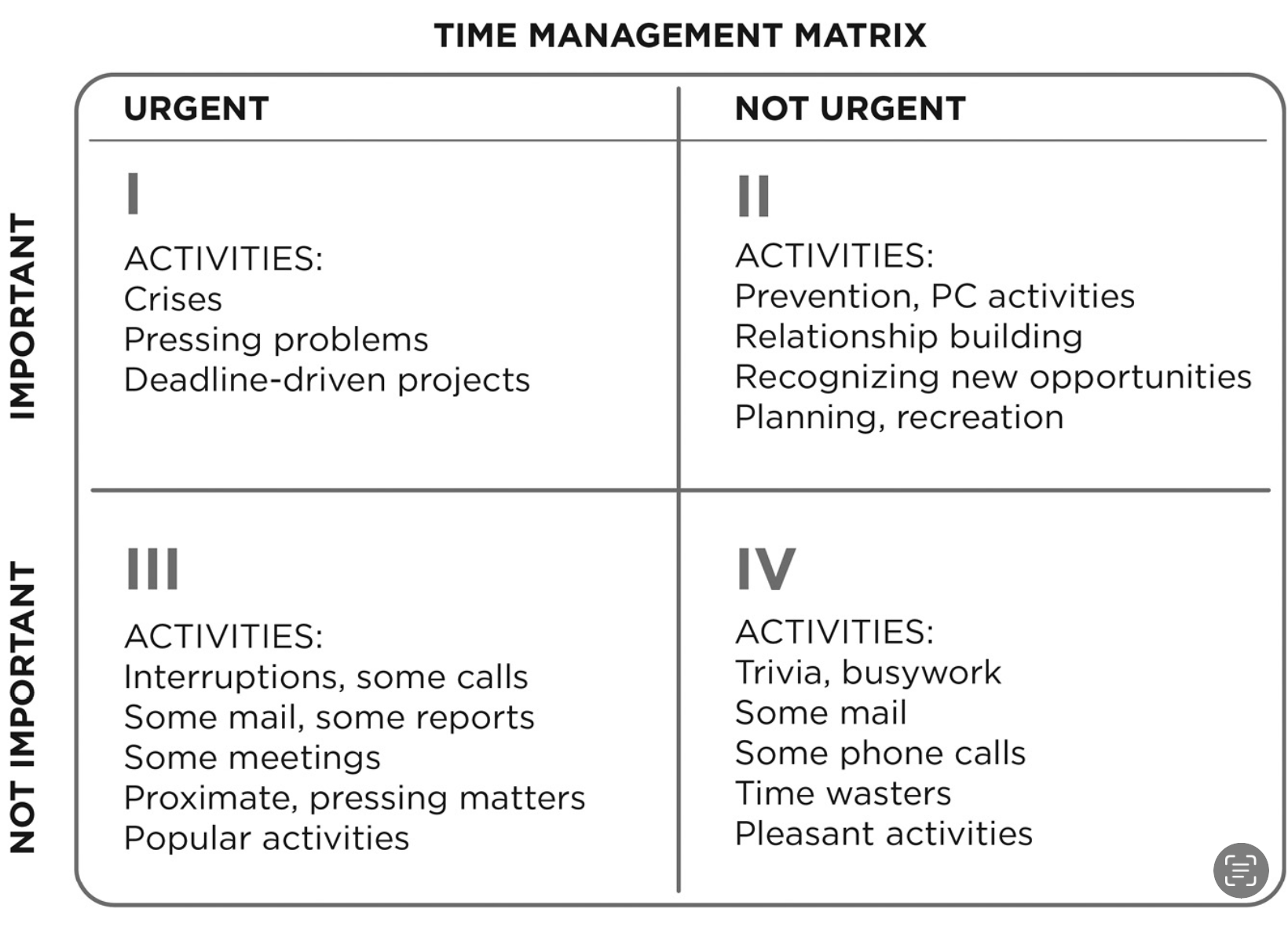
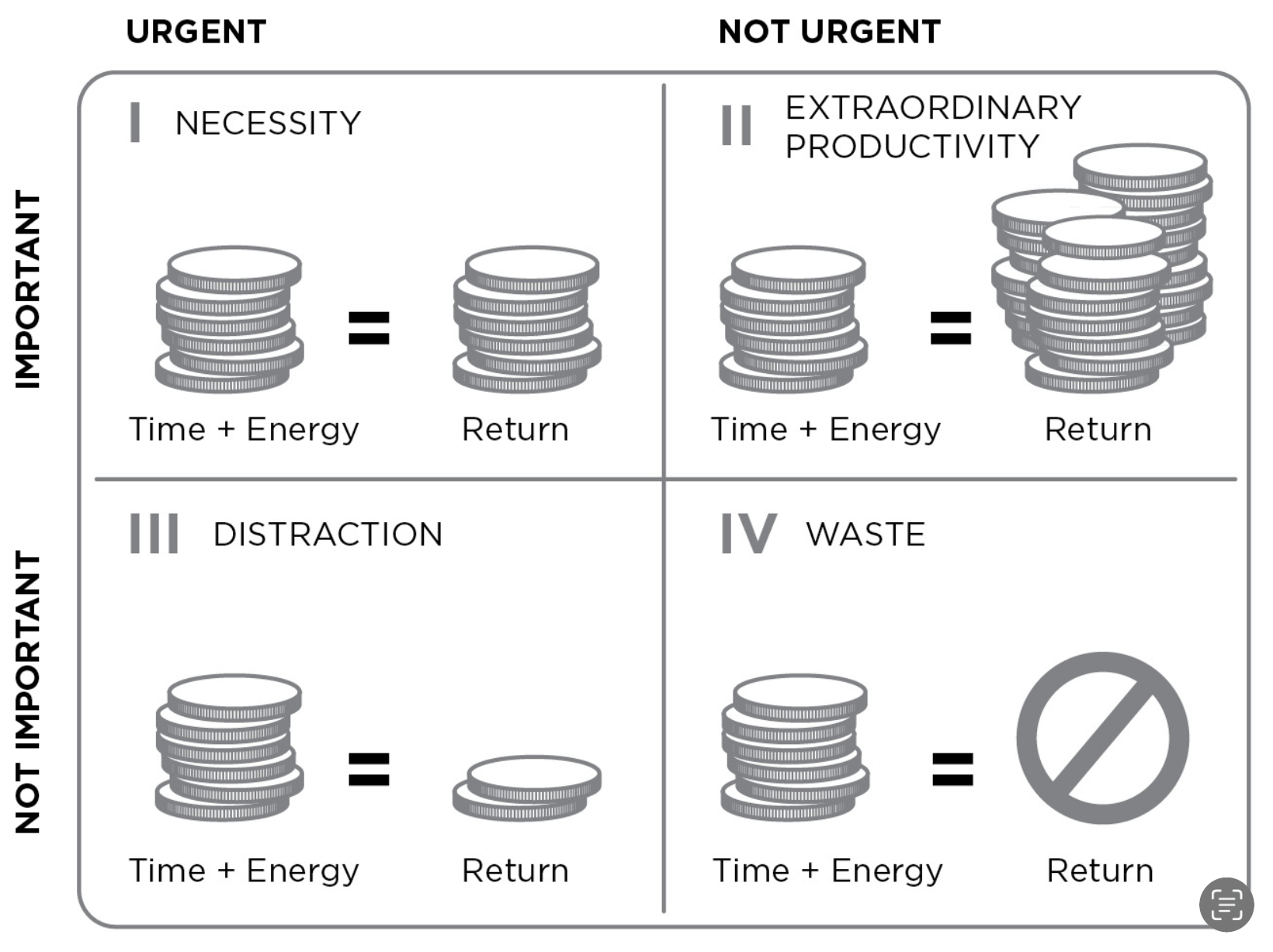
The essential focus of the 4th generation management can be captured in the following time management matrix diagram.
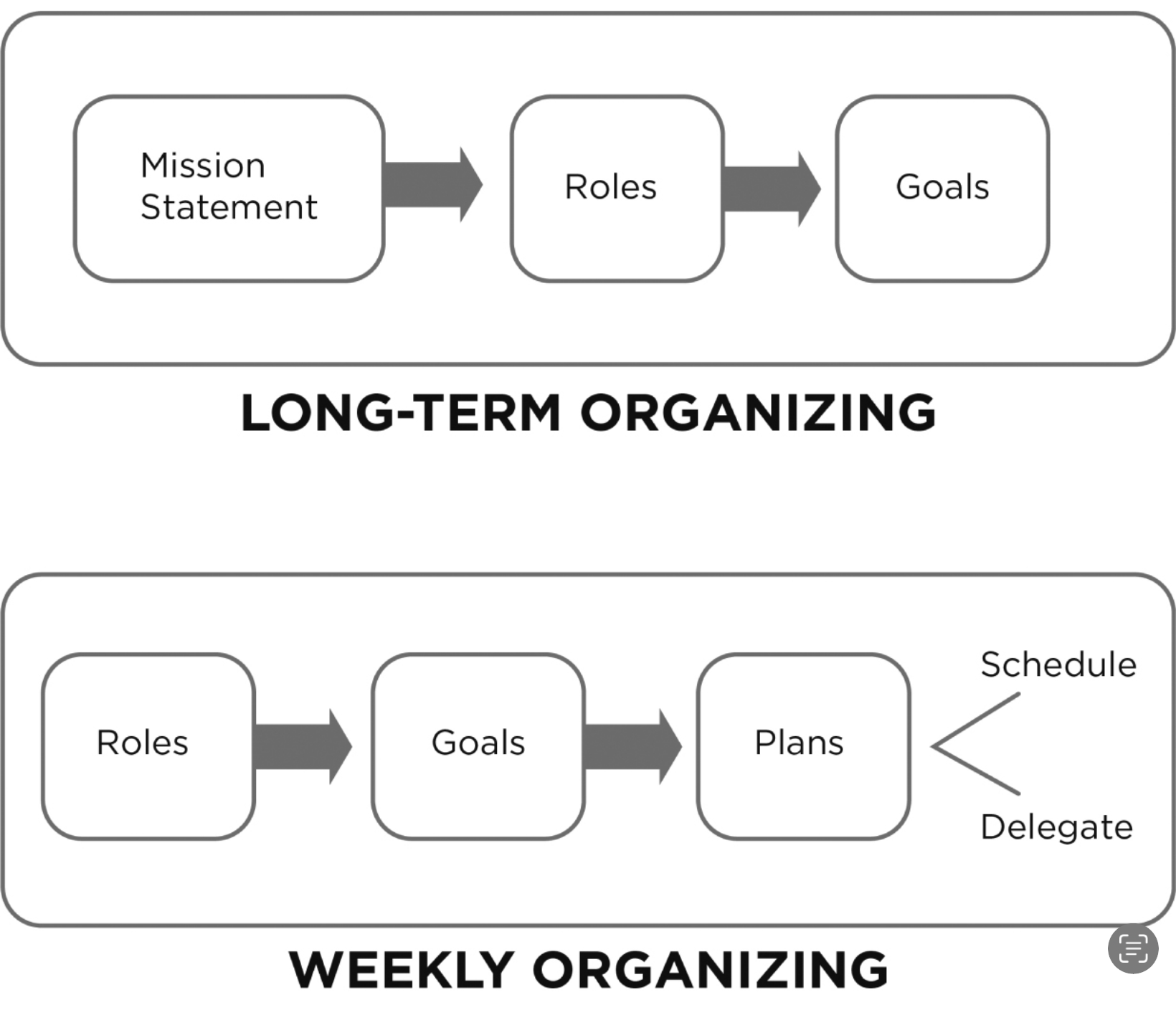
If you were to fault yourself in one of three areas, which would it be:
1) the inability to prioritize
2) the inability or desire to organize around those priorities
3) the lack of discipline to execute around them, to stay with your priorities and organization
Most people say their main fault is a lack of discipline.
You simply can’t think efficiently with people. You think effectiveness with people and efficiency with things. I’ve tried to be “efficient” with a disagreeing or disagreeable person it simply doesn’t work. I’ve tried to give ten minutes of “quality time” to a child or an employee to solve a problem, only to discover such “efficiency” creates new problems and seldom resolves the deepest concern.
Delegation: increasing P and PC
Effectiveness lies in the balance – called P/PC balance.
– P stands for the production of desired results, the golden eggs.
– PC stands for production capability, the ability or asset that produces the golden eggs.
We accomplish all that we do through delegation – either to time or to other people. If we delegate time, we think of efficiency. If we delegate to other people, we think of effectiveness.
Many people refuse to delegate to other people because they feel it takes too much time and effort and they could do the job better themselves. But effectively delegating to others is perhaps the single most powerful high-leverage activity there is.
Transferring responsibility to other skilled and trained people enables you to give your energies to other high-leverage activities. Delegation means growth, both for individuals and for organizations.
A producer can invest one hour of effort and produce one unit of results, assuming no loss of efficiency.

A manager, on the other hand, can invest one hour of effort and produce ten fifty or a hundred units through effective delegation.
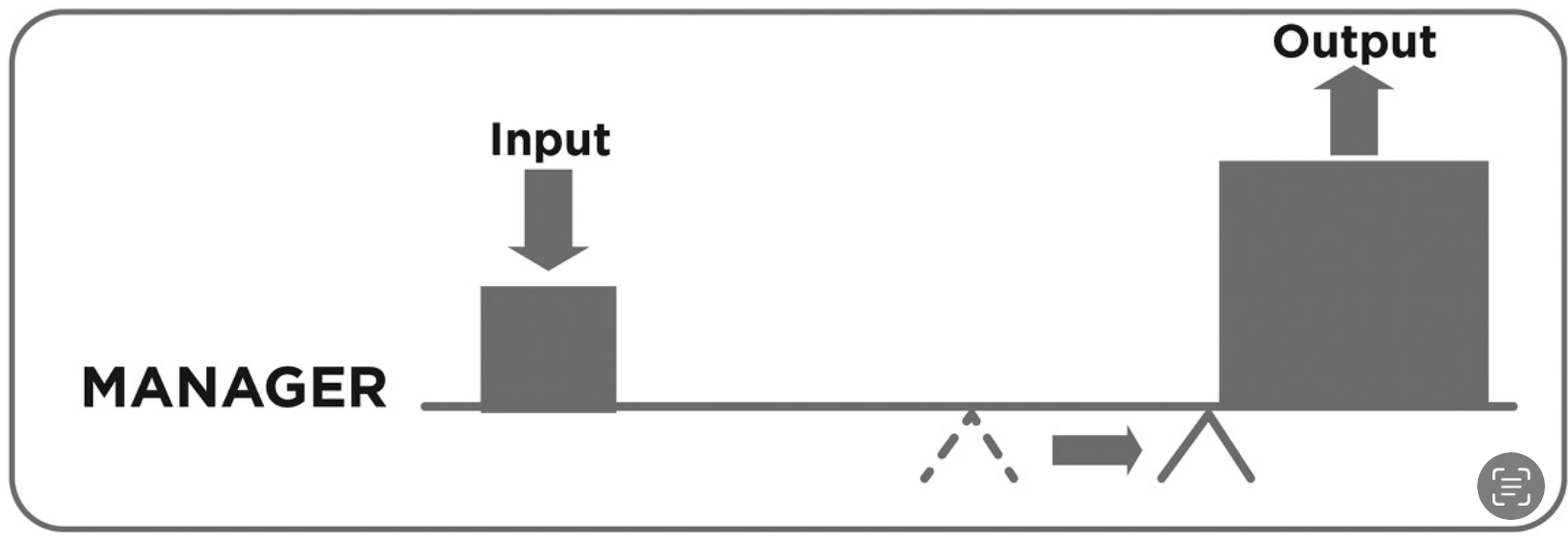
Management is essentially moving the fulcrum over, and the key to effective management is delegation.
There are basically two kinds of delegation:
* “gofer delegation”
* “stewardship delegation”.
Gofer delegation
Gofer delegation means “Go for this, go for that, do this, do that, and tell me when it’s done.” Most people who are producers have a gofer delegation paradigm.
Stewardship delegation
Stewardship delegation is focused on results instead of methods. It gives people a choice of method and makes them responsible for results. It takes more time in the beginning, but it’s time well invested. You can move the fulcrum over, and you can increase your leverage, through stewardship delegation.
Stewardship delegation involves clear, up-front mutual understanding and commitment regarding expectations in five areas.
1. Desired results – create a clear, mutual understanding of what needs to be accomplished, focusing on what, not how; results, not methods. Spend time. Be patient. Visualize the desired result. Have the person see it, describe it, and make out a quality statement of what the results will look like, and by when they will be accomplished.
2. Guidelines – identify the parameters within which the individual should operate. These should be as few as possible to avoid methods of delegation but should include any formidable restrictions.
3. Resources – identify the human, financial, technical, or organizational resources the person can draw on to accomplish the desired results.
4. Accountability – set up the standards of performance that will be used in evaluating the results and the specific times when reporting and evaluation will take place.
5. Consequences – specify what will happen, both good and bad, as a result of the evaluation. This could include such things as financial rewards, psychic rewards, different job assignments, and natural consequences tied into the overall mission of an organization.
When you take the job, I don’t do it anymore. It’s your job. It’s called a stewardship. Stewardship means ‘a job with a trust’. I trust you to do the job, to get it done.
The urgency Index
An assessment extracted from the book – as you read each statement circle the number that best describes your response (0=Never, 2=Sometimes, 4=Always)
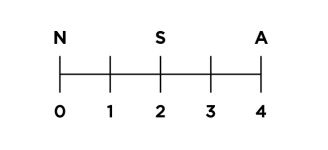
- I seem to do my best work when I’m under pressure.
- I often blame the rush and press of external things for my failure to spend deep, introspective time with myself.
- I’m often frustrated by the slowness of people and things around me. I hate to wait or stand in line.
- I feel guilty when I take time off work.
- I always seem to be rushing between places and events.
- I frequently find myself pushing people away so that I can finish a project.
- I feel anxious when I’m out of touch with the office for more than a few minutes.
- I’m often preoccupied with one thing when I’m doing something else.
- I’m at my best when I’m handling a crisis situation.
- The adrenaline rush from a new crisis seems more satisfying to me than the steady accomplishment of long-term results.
- I often give up quality time with important people in my life to handle a crisis.
- I assume people will naturally understand if I have to disappoint them or let things go to handle a crisis.
- I rely on solving some crises to give my day a sense of meaning and purpose.
- I often eat lunch or other meals while I work.
- I keep thinking that someday I’ll be able to do what I want.
- Accomplishing a lot of tasks makes me feel like I’ve been really productive.
Now that you’ve gone through the index, add up your total score and measure yourself with the following key:
00-25 Low-urgency mindset
26-45 Strong urgency mindset
46+ Urgency addiction
Shift your paradigm
The solution to overcoming your urgency addiction is to shift your paradigm from one of urgency to one of importance.
Some insight about the Time Matrix: thanks to smartphones, social media, and the like, it is increasingly difficult to stay out of Quadrants I and III. In fact, data shows that 51.2% of our time is spent responding to urgent things.
Block out time in advance
Set aside thirty minutes each week to plan your week, and watch it change your life. “If you are planning daily, you are just managing crises.”
Relationships are the stuff life is made of, and effective people prioritize people over things, and relationships over schedules.
Spending the majority of time in Quadrant II – preventing urgencies, planning ahead, and building relationships, results in a great return of friendships, customer loyalty, and personal joy.
 alin miu
Pingback: The 7 Habits of Highly Effective People – Part three: Public Victory | alin miu
Pingback: The 7 Habits of Highly Effective People – Part four: Renewal | alin miu