
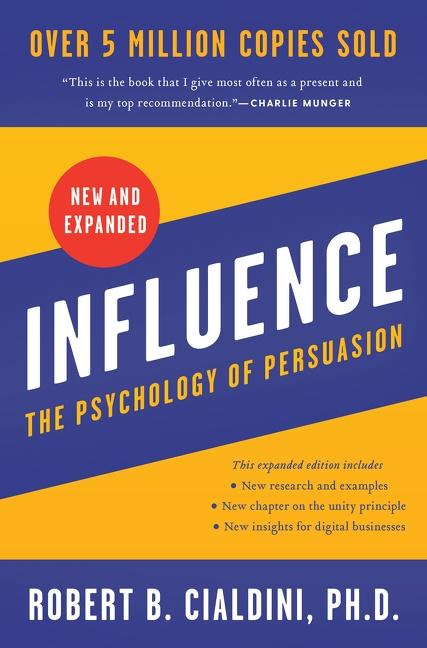
Chapter 1 – Levers of Influence
Perceptual contrast – the tendency to see two things that are different from one another as being more different than they actually are – is a lever of influence used by some compliance practitioners. For example, real-estate agents may show prospetive home buyers one or two unattractive options before showing them a more attractive home, which then seems more attractive than it would have if shown first. An advantage of employing this lever of influence is that its tactical use typically goes unrecognized.
“Dear Mother and Dad:
Since I left for college I have been remiss in writing and I am sorry for my thoughtlessness in not having written before. I will bring you up to date now, but before you read on, please sit down. You are not to read any further unless you are sitting down, okay?
Well, then, I am getting along pretty well now. The skull fracture and the concussion I got when I jumped out the window of my dormitory when it caught on fire shortly after my arrival here is pretty well healed now. I only spent two weeks in the hospital and now I can see almost normally and only get those sick headaches once a day. Fortunately, the fire in the dormitory, and my jump, was witnessed by a worker at the gas station near the dorm, and he was the one who called the Fire Department and the ambulance. He also visited me in the hospital and since I had nowhere to live because of the burnt out dormitory, he was kind enough to invite me to share his apartment with him. It’s really a basement room, but it’s kind of cute. He is a very fine boy and we have fallen deeply in love and planning to get married. We haven’t got the exact date yet, but it will be before my pregnancy begins to show.
Yes, Mother and Dad, I am pregnant. I know how much you are looking forward to being grandparents and I know you will welcome the baby and give it the same love and devotion and tender care you gave me when I was a child. The reason for the delay in our marriage is that my boyfriend has a minor infection which prevents us from passing our pre-marital blood tests and I carelessly caught it from him.
Now that I have brought you up to date, I want to tell you that there was no dormitory fire, I did not have a concussion or skull fracture, I was not in the hospital, I am not pregnant, I am not engaged, I am not infected, and there is no boyfriend. However, I am getting a “D” in American History, and an F in Chemistry, and I want you to see those marks in their proper perspective.
Your loving daugher,
X
Chapter 2 – Reciprocation
The rule enforces uninvited debts – French anthropologist Marcel Mauss, in describing the social pressures surrounding the gift-giving process, says there is an obligation to give, an obligation to receive, and an obligation to replay.
Although an obligation to repay constitutes the essence of the reciprocity rule, it’s the obligation to receive that makes the rule so easy to exploit. A responsibility to receive reduces our ability to choose those to whom we wish to be indebted and puts the power in the hands of others.
Research shows that group-based reciprocity extends to mistreatment. If we are harmed by a member of another group and we can’t harm that person, we’re more likely to take our revenge by mistreating someone else of that group.
The rule can trigger unequal exchanges – a Japanese proverb makes this point eloquently: “There’s nothing more expensive than that which comes for free.”
There is another reason as well. A person who violates the reciprocity rule by accepting without attempting to return the good acts of others is disliked by the social group.
Rejection then retreat – because the rule of reciprocation governs the compromise process, it is possible to use an initial concession as part of a highly effective compliance technique. The technique is a simple one that we can call the rejection-then-retreat technique, although it is also known as the door-in-the face technique. Suppose you want me to agree to a certain request. One way to increase the chances I will comply is first to make a larger request of me, one that I will most likely turn down. Then, after I have refused, you make the smaller request that you were really interested in all along. Provided that you structured your requests skillfully, I should view your second request as a concession to me and should feel inclined to respond with a concession of my own – compliance with your second request.
Rejecting the rule – how does one go about neutralizing the effect of a social rule such as the one for reciprocation? It seems too widespread to escape and too strong to overcome it is activated. Perhaps the answer is to prevent its activation.
Chapter 3 – Liking
“There is nothing more effective in selling anything than getting customers to believe, really believe, you like them.” – Joe Girard, Guinness Book of World Records “Greatest Car Salesman”
Why do I like you? Let me list the reasons:
physical attractiveness – social scientists call halo effects. A halo effect occurs when one positive characteristic of a person dominates the way he or she is viewed in most other respects. The evidence is now clear that physical attractiveness is often such a characteristic.
similarity – we like people who are like us. It’s a fact that applies to human infants as young as nine months and holds true later in life whether the similarity is in the area of opinions, personality traits, background, or lifestyle. People are even more likely to purchase a product if its brand name shares initial letters with their own name.
compliments – find and give genuine compliments you want the recipient to live up to.
contact and cooperation – for example, in a study of online advertising, banner ads for a camera were flashed five times, twenty times, or not at all at the top of an article participants read. The more frequently the ad appeared, the more the participants came to like the camera, even though they were not aware of seeing the ads for it.
As studies reveal, “jigsaw classroom” is an effective way not only to bring about friendship and cooperation among different ethnic groups but also to increase minority students’ self-esteem, liking for school, and test scores.
Conditioning and association
Remember how they were always warning us against playing with the bad kids down the street? Remember how they said it didn’t matter if we did nothing bad because, in the eyes of the neighborhood, we would be known by the company we kept? Our parents were teaching us about guilt by association; they were giving us a lesson in the negative side of the principle of association. And they, too, were right. People do assume that we have the same personality traits as our friends.
Defense – the feeling that we have come to like the practitioner more quickly or more deeply that we would have expected. Once we notice this feeling, we will have been tipped off that there is probably some tactic being used, and we can start taking the necessary countermeasures. Of course, when we make a compliance decision, it is always a good idea to separate our feelings about the requester from the request.
Chapter 4 – Social proof
When people are free to do as they please, they usually imitate one another. Eric Hoffer
To discover why popularity is so effective, we need to understand the nature of yet another potent lever of influence: the principle of social proof. This principle states that we determine what is correct by finding out what other people think is correct. Importantly, the principle applies to the way we decide what constitutes correct behavior. We view an action as correct in a given situation to the degree that we see others performing it.
People power – “Since 95 percent of the people are imitators and only 5 percent are initiators, people are persuaded more by the actions of others than by any proof we can offer.”
After the deluge – the principle of social proof says so: the greater the number of people who find any idea correct, the more a given individual will perceive the idea to be correct.
In the case of social proof, there are three main optimizing conditions: when we are unsure of what is best to do(uncertainty); when the evidence of what is best to do comes from numerous others(the many); and when that evidence comes from people like us(similarity).
Experiments show that the use of fabricated merriment leads audiences to laugh more frequently and longer, as well as to rate humorous material funnier.
Feasibility – if we see a lot of other people doing something, it doesn’t just mean it’s probably a good idea. It also means we could probably do it too. A study of residents of several Italian cities found that if residents believed many of their neighbors recycled in the home then they were more willing to recycle themselves, in part, because they saw recycling as less difficult to manage.
Defense – if we can become sensitive to situations in which the social-proof autopilot is working with inaccurate information, we can disengage the mechanism and grasp the controls when necessary.
Sabotage – there are two types of situations in which incorrect data causes the principle of social proof to give us poor counsel. The first occurs when the social evidence has been purposely falsified. A cruder and more unethical sort of falsification can also appear: commercial producers may not bother to get genuine testimonials, merely hiring actors, instead, to play the roles of average people testifying.
Chapter 5 – Authority
Our obedience frequently takes place in a “click, run” fashion with little or no conscious deliberation. Information from a recognized authority can provide us a valuable shortcut for deciding how to act in a situation.
Titles – are simultaneously the most difficult and the easiest symbols of authority to acquire. Earning a title normally takes years of work and achievement. Yet it is possible for somebody who has put in none of the effort to adopt the mere label and receive automatic deference.
In one experiment conducted on five classes of Australian college students, a man was introduced as a visitor from Cambridge University in England. However, his status at Cambridge was represented differently in each of the classes. To one class, he was presented as a student; to a second class, a demonstrator; to another, a lecturer; to yet another, a senior lecturer; to a fifth, a professor. After he left the room, the class was asked to estimate his height. With each increase in status, the same man grew in perceived height by an average of half-inch, so that he was seen as two and a half inches taller as the “professor” than as the “student”.
There are two lessons here: one is specific to the association between size and status. The other lesson is more general: the outward signs of power and authority may be counterfeited with the flimsiest of materials.
Clothes – a second kind of authority symbol that can trigger our mechanical compliance is clothing. Through more tangible than a title, the cloak of authority is every bit as fakeable.
In hospitals where nurses are aware of this hierarchy, they rarely question the orders of “long coats”; but when interacting with “short coats”, hospital staffers make alternative medical diagnoses and therapy suggestions openly – and sometimes rudely.
In hierarchical organizations, not only are those with authority statuses treated respectfully, but those without such status are often treated disrespectfully. As we saw in the reader’s account, and as we will see in the next section, the symbol of status one displays can signal to others which form of treatment seems appropriate.
People judge those dressed in higher quality apparel, even higher quality T-shirts, as more competent than those in lesser quality attire – and the judgments occur automatically, in less than a second.
Compared to the true findings of the experiment, the students consistently underestimated the time to honk at the luxury car. The male students were especially inaccurate, feeling that they would honk faster at the prestige than at the economy car driver; of course, the study itself showed just the opposite. Authority influence not only works forcefully on us but does so without our awareness.
Audiences trust and follow the advice of a set of experts more than that of any one of them. Thus, a communicator who does the work of collecting and then pointing to support from multiple experts will be more successful than a communicator who settles for claiming the support of just one.
The credible authority – so far, we’ve seen that being viewed as either in authority or an authority leads to increased compliance. But the first of these types, merely being in charge has its problems. As a rule, people don’t like being ordered to do things. It often generates resistance and resentment. For this reason, most business schools teach prospective managers to avoid “command and control” approach to leadership and embrace approaches designed to promote willing cooperation. Let’s focus, then, on the methods and outcomes of being perceived as an authority.
Expertise – for example, expertise appears to create a halo effect for those who possess it; a therapist’s office with multiple diplomas and professional certifications on the wall produces higher ratings not only for the therapist’s proficiency but also of his or her kindness, friendliness, and interest in clients.
Trustworthiness – besides wanting our authorities to give us expert information, we want them to be trustworthy sources of the information.
Defense – one protective tactic we can use against authority status is to remove its element of surprise. Because we typically misperceive the profound impact of authority (and its symbols) on our actions, we become insufficiently cautious about its presence in compliance situations.
Chapter 6 – Scarcity
People are intensely motivated to make choices designed to avoid losing something of value – to a much greater extent than choices designed to obtain that thing. The general idea of “loss aversion” that people are more driven by the prospect of losing an item of value than by the prospect of gaining it – is the centerpiece of Nobel laureate Daniel Kahneman’s prospect theory, which has been generally supported by studies done in multiple countries and in multiple domains such as business, the military, and professional sports.
One prominent theory accounts for the primacy of loss over gain in evolutionary terms. If one has enough to survive, an increase in resources will be helpful but a decrease in those same resources could be fatal. Consequently, it would be adaptive to be especially sensitive to the possibility of loss.
The wisdom of offering abundant items for sale one at a time recognizes that abundance is the opposite of scarcity and, consequently, presenting an item in abundance reduces its perceived value.
Scarcity – highlighting items low in stock
Social proof – describing most popular and trending items
Urgency – using time limits, often with a countdown timer
Concessions – offering discounts for visitors to stay on the site
Authority/Expertise – informing visitors of alternative products that are available
Liking – including a welcoming message
An old adage advises, “If you really want to get something done, you’ve got three options: do it yourself, pay top dollar, or forbid your teenagers to do it.” For teenagers, the emergence is out of the role of child, with all of its attendant parental control, and into the role of adult, with all of its attendant rights and duties. Not surprisingly, adolescents focus less on the duties than on the rights they feel they have as young adults. Not surprisingly, again, imposing traditional parental authority at these times is often counter-productive; teenagers will sneak, scheme, and fight to resist such attempts at control.
When people encounter a piece of information, they immediately become less likely to accept it if they view it as part of an effort to persuade them. For one reason, they experience reactance, feeling that the persuasive appeal is an attempt to reduce their freedom to decide on their own.
Insight: the joy is not in the experiencing of a scarce commodity but in the possessing of it. It is important that we not confuse the two.
The scarcity principle is most likely to hold under two optimizing conditions. First, scarce items are heightened in value when they are newly scarce. That is, we value those things that have recently become restricted more than we do those that are restricted all along. Second, we are most attracted to scarce resources when we compete with others for them.
It is difficult to steel ourselves cognitively against scarcity pressures because they have an emotion-arousing quality that makes thinking difficult. In defense, we might try to be alert to a rush of arousal in situations involving scarcity. Once alerted, we can take steps to calm the arousal and assess the merits of the opportunity in terms of why we want it.
Chapter 7 – Commitment and consistency
Once we make a choice or take a stand, we encounter personal and interpersonal pressures to think and behave consistently with that commitment. Moreover, those pressures will cause us to respond in ways that justify our decision.
Inconsistency is commonly thought to be an undesirable personality trait. The person whose beliefs, words, and deeds don’t match is seen as confused, two-faced, even mentally ill. On the other side, a high degree of consistency is normally associated with personal and intellectual strength.
Have you noticed that callers asking you to contribute to some cause or another these days seem to begin things by inquiring about your current health and well-being? “Hello, Mr/Ms. Targetperson” they say. “How are you feeling this evening?”, or “How are you doing today?” The caller’s intent with this sort of introduction is not merely to seem friendly and caring. It is to get you to respond – as you normally do to such polite, superficial inquiries – with a polite, superficial comment of your own: “Just fine” or “Real good” or “Doing great, thanks”. Once you have publicly stated that all is well, it becomes much easier for the solicitor to corner you into aiding those for whom all is not well: “I’m glad to hear that because I’m calling to ask if you’d be wiling to make a donation to help the unfortunate victims of…”
Employing the consistency principle on his own behalf. After assuring evaluators he wanted to answer all their questions as fully as possible, he added, “But, before we start, I wonder if you could answer a question for me. I’m curious, what was it about my background that attached you to my candidacy?” As a consequence, his evaluators heard themselves saying positive things about him and his qualifications, committing themselves to reasons to hire him before he had to make the case himself.
Every time you make a choice, you are turning the central part of you, the part that chooses, into something a little different from what it was before. C.S. Lewis
Notice that all of the foot-in-the-door experts seem to be excited about the same thing: you can use small commitments to manipulate a person’s self-image; you can use them to turn citizens into “public servants”, prospects into “customers” and prisoners into “collaborators”. Once you’ve got a person’s self-image where you want it, that person should comply naturally with a whole range of requests aligned with this new self-view.
86% of users report that they sometimes quit the registration process because the form is too long or prying. What have site developers done to overcome this barrier without reducing the amount of information they get from customers? They’ve reduced the average number of fields of requested information on the form’s first page. Why? They want to give users the feeling of having started and finished the initial part of the process. As design consultant Diego Poza put it “it doesn’t matter if the next page has more fields to fill out (it does), due to the principle of commitment and consistency, users are more likely to follow through.” The available data have proved him right: Just reducing the number of first-page fields from four to three increases registration completions by 50%.
The more public our commitment, the more pressure we feel to act according to our commitment and therefore appear consistent. You can use small commitments to manipulate a person’s self-image. And one you change a person’s self-image you can get that person to behave in accordance with the new image – anything that would be consistent with this new view of herself.
Social scientists have determined that we accept inner responsibility for a behavior when we think we have chosen to perform it in the absence of strong outside pressure.
“He who agrees against his will / Is of the same opinion still.”
Growing legs to stand on – for a pair of reasons we have already considered, compliance professionals love commitments that produce inner change. First, the change is not specific to the situation where it initially occurred; it covers a whole range of related situations too. Second, the effects of the change are lasting. Once people have been induced to take actions that shift their self-images to that of, let’s say, public-spirited citizens, they are likely to be public-spirited in a variety of other circumstances where their compliance may also be desired. And they are likey to continue their public-spirited behavior for as long as their self-images hold.
When we are rushed or not able to think deeply about a choice, mechanical consistency is the norm.
Psychological research indicates that we experience our feelings toward something a split second before we can intellectualize about it. I’d guess the message sent by the heart of hearts is a pure, basic feeling. Therefore, if we train ourselves to be attentive, we should register the feeling slightly before our cognitive apparatus engages.
Individuals who scored high on preference for consistency were especially likely to comply with a requester who used either the foot-in-the-door or the low-ball technique. In a follow-up study employing subjects from ages eighteen to eighty, we found that a preference for consistency increased with the years and that once beyond the age of fifty, people displayed the strongest inclination of all to remain consistent with their earlier commitments.
In individualistic nations, such as the United States and those of Western Europe, the focus is on the self, whereas, in more collectivistic societies, the focus is on the group. Consequently, individuals decide what they should do in a situation by looking primarily at their own histories, opinions, and choices rather than at those of their peers, and such a decision-making style causes them to be highly vulnerable to influence tactics that use as leverage what a person has previously said or done.
Chapter 8 – Unity
Automatically and incessantly, everyone divides people into those to whom the pronouns we do and do not apply. The implications for influence are great because, inside our tribes, everything influence-related is easier to achieve. Those within the boundaries of “we” get more agreement, trust, help, liking, cooperation, emotional support, and forgiveness and are even judged as being more creative, moral, and humane. The in-group favoritism seems not only farranging in its impact on human action but also primitive, as it appears in other primates and in human children as young as infants.
Members of “we”-based groups favor the outcomes and welfare of fellow members over those of nonmembers – by a mile.
“If you can’t make your case to an audience with facts, sing it to them.” Thus, communicators whose ideas have little rational firepower don’t have to give up the fight; they can undertake a flanking maneuver. Equipping themselves with music and song, they can move their campaign to a battleground where rationality possesses little force, where sensations of harmony, synchrony, and unity win the day.
Chapter 9 – Instant Influence
Because of the increasing tendency for cognitive overload in our society, the prevalence of shortcut decision-making is likely to increase proportionately. Compliance professionals who infuse their requests with one or another of the levers of influence are more likely to be successful. The use of these levers by practitioners is not necessarily exploitative. It only becomes so when the lever is not a natural feature of the situation but is fabricated by the practitioner. In order to retain the beneficial character of shortcut response, it is important to oppose such fabrication by all appropriate means.
 alin miu