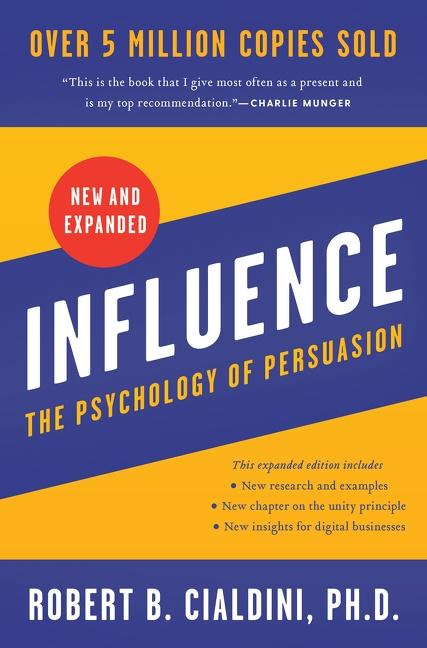
Influence

Chapter 1 – Levers of Influence

Perceptual contrast – the tendency to see two things that are different from one another as being more different than they actually are – is a lever of influence used by some compliance practitioners. For example, real-estate agents may show prospetive home buyers one or two unattractive options before showing them a more attractive home, which then seems more attractive than it would have if shown first. An advantage of employing this lever of influence is that its tactical use typically goes unrecognized.

Continue reading

Thinking Fast and Slow

Aim for watercooler conversations: improve the ability to identify and understand errors of judgment and choice, in others and eventually in ourselves, by providing a richer and more precise language to discuss them.

Social scientists in the 1970s broadly accepted two ideas about human nature. First, people are generally rational, and their thinking is normally sound. Second, emotions such as fear, affection, and hatred explain most of the occasions on which people depart from rationality.

Continue reading

Games people play

Structural analysis

Observations on spontaneous social activities show that, from time to time, people visibly change their body position, point of view, tone of voice, vocabulary, or even other aspects of their behaviors. These behavioral changes are often followed by emotional changes. These changes and differences can be called “ego states”.
Each individual seems to have a limited set of such ego states, and they should not be mistaken with roles, but they are philological realities.
This set of states can be grouped into the following categories:

Continue reading